
HN Signal (Last 24 hours)

#1

HN Signal (Last 24 hours)

The top stories from Hacker News in the last 24 hours, filtered from /best.

Debrief turns hand-picked sources into curated content feeds, with AI agents you control.

01/david-smith.org·May 3

Six Years Perfecting Maps on watchOS - David Smith, Independent iOS Developer

The article chronicles six years of building a fully SwiftUI-native, tile-based watchOS mapping engine for Pedometer++, evolving from server-rendered maps to offline-capable on-device rendering and a Liquid Glass–compatible cartographic basemap (including dark mode legibility). It also details the iterative UX work required to make a one-handed, navigation-first wrist map usable without long configuration flows, ultimately landing on a layered “browse mode” design with polished typography and interaction.

  1. 02/ladybird.org·May 3

    This Month in Ladybird - April 2026 - Ladybird

    April 2026 in Ladybird focused on making the browser pipeline more incremental and parallel: streaming HTML parsing, off-thread JS bytecode compilation, per-Navigable rasterization, and non-blocking DNS all reduce main-thread stalls. User-visible features like an inline pdf.js viewer and rich history-aware address bar autocomplete pair with broader engine/frontend gains (GC/alloc, caching, CSS layout/invalidation, GTK4 frontend, Cache/CacheStorage), yielding measurable performance wins on sites like Reddit and YouTube.

  2. 03/drive.com.au·May 3

    Physical buttons return to upcoming Mercedes-Benz interiors

    Mercedes-Benz is reversing course on touch-sensitive “menu-deep” controls by reintroducing physical buttons, switches and dials for frequently used functions while still keeping large screen-first architecture (e.g., the 39.1-inch MBUX Hyperscreen). The upcoming GLC and C-Class will combine the seamless display with dedicated hard keys—plus returning hard controls on the steering wheel—to improve direct usability.

  3. Follow this debrief

    Get the latest editions of HN Signal (Last 24 hours).

  4. 04/thinkpol.ca·May 3

    An open-weights Chinese model just beat Claude, GPT-5.5, and Gemini in a programming challenge - ThinkPol

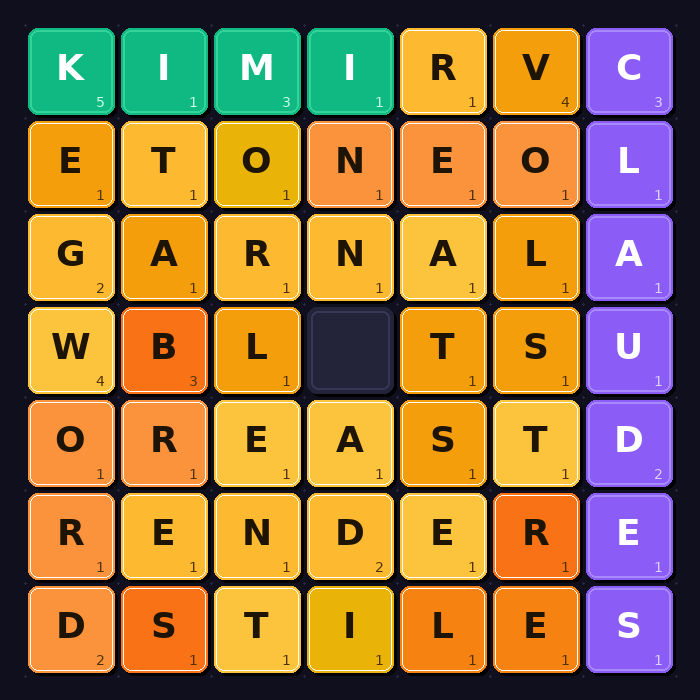
    An open-weights Chinese model, Moonshot AI’s Kimi K2.6, won the AI Coding Contest (Word Gem Puzzle), scoring 22 points and beating GPT-5.5 and Claude Opus 4.7 in a real-time TCP-connected coding benchmark. The article argues the gap came less from raw “capability” and more from strategy—e.g., active sliding vs static word scanning—with 30×30 grids disproportionately favoring models that keep generating move-based claims.

  5. 05/universiteitleiden.nl·May 3

    Neanderthals ran ‘fat factories’ 125,000 years ago - Leiden University

    A 125,000-year-old Neanderthal site (Neumark-Nord 2) in Germany preserves evidence that they “rendered” fat by crushing large mammal bones into tens of thousands of fragments and heating them in water, not just extracting marrow from intact bones. The scale—bones from at least ~172 large animals plus likely organized transport/caching to a task-specific processing area—indicates planned, labor-intensive “fat factory” production rather than opportunistic scavenging.

  6. 06/blog.haskell.org·May 3

    A Couple Million Lines of Haskell: Production Engineering at Mercury | The Haskell Programming Language's blog

    Mercury runs a ~2M LOC Haskell codebase in fintech production by treating reliability as “adaptive capacity” and using the type system primarily to encode operational/institutional invariants into APIs and boundaries (e.g., making the correct transaction-and-events path the only path). The article argues that production success comes from containment plus operability: domain-level error modeling, durable workflow orchestration (Temporal), and “escape hatches” for observability and instrumentation (e.g., records-of-functions/middleware), with selective tradeoffs where types can’t practically enforce real-world semantics.

  7. 07/acai.sh·May 3

    acai.sh

    acai.sh is an opinionated spec-driven workflow that encodes feature requirements as machine-addressable feature.yaml entries (ACIDs), then uses a CLI + dashboard/API to link those acceptance criteria to code and review status. It shifts QA bottlenecks from “read every diff” toward tracking spec alignment/acceptance coverage across many implementations and iterations.

  8. 08/blog.feld.me·May 3

    Open Source Does Not Imply Open Community – Makefile.feld

    The article argues that “open source” doesn’t inherently require an “open community” or governance machinery like issues, PRs, wikis, and social processes; historically, publishing via email/FTP and tarballs could be enough. It claims platforms like GitHub turned maintenance into an always-on, second job—adding organizational overhead and conflict—so projects can instead choose a small trusted group or even solo “code drops” without inviting strangers into the workflow.